

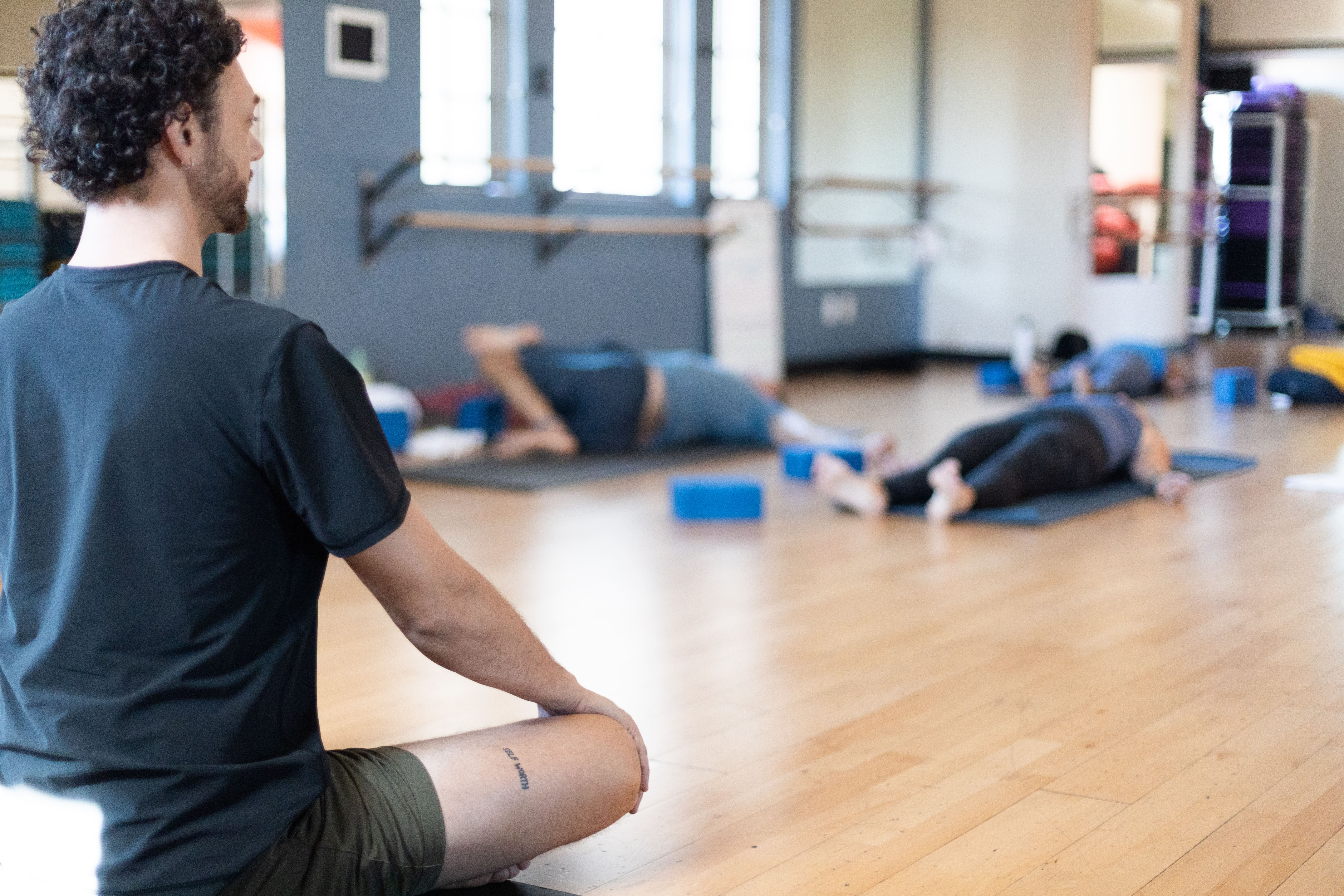
Yoga and Pilates have both received ample attention for helping improve flexibility and supporting mental calm. Yet, Pilates and yoga have completely unique approaches and origins. In some ways they are similar, in others, quite different.
If you are looking for a fitness program that can help you look and feel better, then yoga and Pilates are great choices. Read on to learn more about each system and discover which is the best fit for you!
.jpg?width=437&height=291&name=comp_pexels-elly-fairytale-3823076%20(1).jpg) Yoga
Yoga
Yoga is a meditation, movement, and breathing practice that originated in India. Yoga is generally performed on mats on the floor. Yoga consists of balancing, moving, and still poses. Deep abdominal breathing is accompanied with each movement.
What are the origins of yoga?
Yoga is an ancient system of physical and mental practices that originated in the ancient civilization in Northern India over 5,000 years ago. The word yoga was first mentioned in the oldest sacred text, the Rig Veda.
Swami Vivekananda, a Hindu monk from India, brought yoga to the United States in 1893. It was launched into a modern cultural phenomenon in the 1970s, due to the health and exercise boom of that era.
What are the benefits of yoga?
The fundamental purpose of yoga is to foster harmony in the body, mind, and environment. Practicing yoga improves flexibility, reduces inflammation, increases strength, improves balance, supports joint health, and eases and prevents back pain.
Yoga also benefits mental and emotional health. It can reduce stress and anxiety, helping to create a calm mind and boost the mood.
 Who can do yoga?
Anyone can do yoga. There are many levels and all different types of classes to suit all students' needs. Instructors can modify poses to help people with limitations.
- Teen yoga
- Adult yoga
- Prenatal yoga
- Yoga for seniors
- Toddler and kid yoga
What are the different types of yoga?
There are many types of yoga, each with their distinct emphasis or style. A student can choose from many types of yoga, depending on what resonates with their body and fitness goals.
- Yin
- Hot
- Flow
- Kriya
- Hatha
- Gentle
- Iyengar
- Restorative
- Therapeutic
Is there specific equipment you need to do yoga?
You need to purchase a yoga mat for class. Mat carriers, foam or cork blocks, and cloth belts are other props people often purchase.
 Pilates
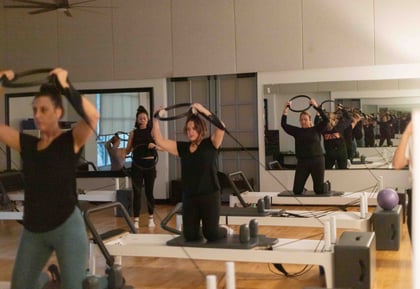
Pilates can be done on specially-developed exercise machines called reformers or on the floor using yoga mats.
What are the origins of Pilates?
A German-born physical trainer named Joseph Pilates first invented Pilates in the 1920s to rehabilitate injured soldiers. He originally named the movements Pilates Contrology. After his death, the name changed to the Pilates Method.
Later, Joseph Pilates came to New York and opened a studio in the same building where the New York Ballet company resided. He worked on prominent injured dancers such as Martha Graham and George Balanchine.
He developed machines that created resistance for training and published two booklets explaining his approach.
What are the benefits of Pilates?
Pilates focuses on developing core strength which benefits posture, reduces back pain, and enhances the overall alignment of the body. By attending Pilates classes regularly, students also enjoy greater joint mobility and flexibility.
Originally Pilates was designed as a rehabilitation program for soldiers and professional dancers. Though most people are not following the grueling schedules of professional athletes, it remains as a great asset to those who are recovering from injuries or surgeries.
 Who can do Pilates?
Pilates is great for everyone, and is appropriate for all fitness levels. Many professional athletes train using Pilates since it targets core strength and improves range of motion.
Although people often think of Pilates as a practice used primarily by women, Joseph’s initial clientele was 60% men and many men continue to use Pilates to this day.
What are the different types of Pilates?
There are a few different types of Pilates, plus several hybrid versions that combine traditional Pilates with fitness-type movements.
Classical Pilates
Classical Pilates follows the original system created by Joseph Pilates and incorporates both mat and apparatus work. It varies from other forms of Pilates because it is taught in a traditional order, which includes transitions between exercises.
Mat Pilates
Mat Pilates is performed on a yoga mat in lieu of machines and equipment. Mat Pilates is a great option for classes or practicing at home.
Contemporary Pilates
Contemporary Pilates is inspired by, and based on, the classical system of Pilates, but is adapted by the Pilates instructor and their personal style. The Paseo Club uses a contemporary approach.
Winsor Pilates
Renowned Pilates instructor Mari Winsor developed the Winsor Pilates method. It focuses on training by using a combination of classical Pilates exercises performed in a nontraditional order.
Stott Pilates
Stott Pilates creator, ballerina Moira Merrithew, originally studied Pilates after a neck injury. Each class begins with a warm-up to align the body and release neck and back pressure. Her method includes several props, such as the stability ball, foam roller, and BOSU.
 Is there certain equipment needed to do Pilates?
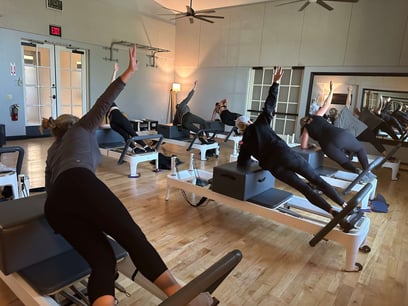
Different Pilates classes use different equipment. Most people purchase only a yoga mat and Pilates socks (socks with textured bottoms) and the remaining equipment is supplied by the studio.
- BOSU
- Bands
- Yoga Mats
- Reformers
- Small balls
- Foam rollers
- Gliding discs
- Magic circles
- Gondola poles
- Cadillac tables
Are there reasons to not do Pilates?
Pilates is a safe practice for almost anyone — even people with heart conditions, high blood pressure, or high cholesterol. The movements can be scaled for people with injuries or limited mobility.
 Which is better, Yoga or Pilates?
Both yoga and Pilates feature movements that benefit everyone, from people living sedentary lifestyles to competitive athletes — and everyone in between. These fitness systems help students build strength, increase flexibility, and feel more tranquil.
However, yoga may be a better fit for people who want to also focus on balance and the mind-body connection through meditation. If you do not want to do work on a reformer or with other equipment, yoga is also a great choice.
Pilates is particularly effective for those in recovery from injuries, who want to improve their posture, or develop greater core strength.
Final thoughts on a Yoga or Pilates Practice
In this article, we have reviewed what yoga and Pilates are, their origins, benefits, and more. Now you know how yoga and Pilates are both similar and different, as well as which might be the best fit for you.
Are you still not sure which class you want to go to? Come to The Paseo Club and try out yoga and Pilates classes and see which you prefer. You can also check out strength training, cycle, liquid cardio, and many more options when you are a member of The Paseo Club. Your membership gives you access to over 60 fitness classes each week!
Do you want to take your self-care to the next level? After yoga class, get a massage or facial at the on-site spa at The Paseo Club. Learn about different types of spa treatments so you know which style of pampering you want.
Stop in for a tour today and check out the indoor and outdoor fitness facilities, tennis and pickleball courts, and the junior-Olympic pool. The Paseo Club is your home away from home.
